 Missionaries
Our founder
Who We Are
Glorifying Christ through prayer, servant leadership and Gospel unity
Our foundation, our burden for pastors and church leaders, and where the journey began.
Our foundation
Ministry begins with Christ, depends on prayer, and is expressed in obedience to His Word
At the heart of Missionaries out of Africa (MOA) is a desire to glorify Jesus Christ through lives transformed by the Gospel, service that reflects His character, and a Church united in His love.
Prayer and dependence on Christ
Jesus taught His disciples to ask in His name so that the Father might be glorified in the Son (John 14:13–14). He also called His followers to abide in Him, bear lasting fruit, and live out their discipleship through His teaching (John 15:7–8, 16).
For us, prayer is more than a spiritual exercise. It is an expression of our dependence on God and our confidence in His purposes. We pray, we serve, and we trust Him to bring forth fruit that honours Christ.
The way of the Servant King
Jesus redefined greatness through service. When He washed His disciples’ feet, He gave us a living example of humility and love (John 13:1–17). We believe that serving God means serving people. Our calling is not to pursue recognition or build an institution for its own sake, but to equip others, strengthen the Church, and help believers discover how their gifts can serve God’s purposes.
We are guided by Christ’s command to love one another as He has loved us (John 15:12–14), a love that crosses cultural, economic, denominational and social boundaries and moves beyond words into practical action.
Answering Christ’s prayer for unity
In John 17, Jesus prayed that His followers would be one, so that the world might believe that the Father had sent Him. We believe Christian unity is more than agreement in words. It is expressed through humility, mutual respect, shared service, and a willingness to work together for the Gospel.
MOA seeks to build bridges between believers, churches, ministries and nations. We do not claim to create the unity for which Christ prayed. Rather, we seek to participate faithfully in it, allowing His love to shape our relationships and our mission.
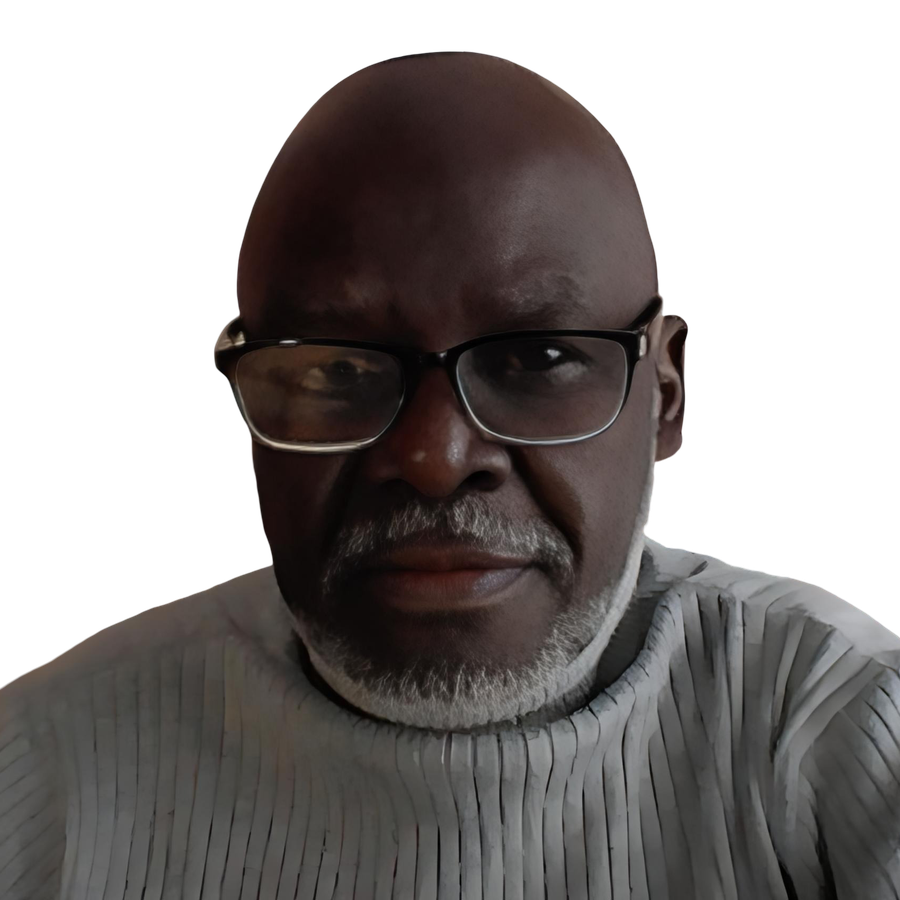
Benwell Chanda
Founder of Missionaries out of Africa
Affectionately known as Missionary Joseph
A breaking point
I was born in Lusaka, Zambia, into a broken family with very little financial support. By Form 2 (what is called Grade 9 today), I had reached a breaking point. My school uniform was worn out, there was no money for a new one, and I stopped going to school.
I knew my teachers believed in me, and I did not want them to think I had let them down by choice. So I let them know why I was absent. Two weeks later, there was a knock at my door. Two of my friends stood there, sent by the school’s deputy head. They handed me a brown envelope. Inside were an old pair of grey trousers and a white shirt. The trousers were too short and I looked funny, but I did not mind. I was going back to school.
Kindness that changed everything
That day, the deputy head told me my teachers had donated money so I could buy a full uniform and shoes. The next day, my English teacher brought me a parcel full of clothes. Soon after, she took me into her home, and I was informally adopted by her. I lived with her until I passed Form 4. When she was transferred to another city, she arranged a place for me at a boarding school, where my accommodation and food were free.
“You can help people whenever you have an opportunity, and that is God’s work.”
My English teacher
A call I could not ignore
That kindness changed the course of my life. I trained as a secondary school maths teacher and taught for three years. Then I resigned to follow my childhood dream of Mechanical Engineering.
Early in the course, I sensed God stirring something in my spirit, and I could not shake it. During the first semester holidays, a close friend sponsored me to attend a vacation Bible seminar at Kaniki Bible College, on the outskirts of Ndola in Zambia, a prestigious gathering that Christians across the country looked forward to. I went with one prayer: that God would confirm whether I was truly hearing Him. There, I received a prophecy that removed every doubt:
“You have been running away from my call. I have called you and I’m going to use your hands to bless my people across the nations. You need to submit to the plan I have for your life and I will lead you step by step.”
A prophecy received at Kaniki Bible College
When I returned to college for the second semester, a fellow student, a member of a pastor friend’s church, told me that his pastor had an urgent message for me from the Lord. That pastor knew nothing about the prophecy, and nothing about what was happening in my private life, which was between God and me. I went to see him, and he said, “Brother Benwell, I want to let you know God is calling you into missions.”
My heart became settled. I had already been involved in local mission work, and now everything tied together, leaving no room for doubt. I knew I could no longer run. I surrendered to God’s plan, and I said yes to full-time ministry as a missionary.
When I told my English teacher I was leaving engineering, she was disappointed. “You can’t do that,” she told me. I answered respectfully, “No. That is not how God is leading me.”
When the money ran out
I went on to study at a Bible college on the outskirts of Pretoria, in South Africa. It was not easy. I had left a free government scholarship in Zambia to follow God’s call, and now I was being sent away from Bible college because of unpaid tuition fees.
I went to the nearby township of Soshanguve, where a pastor friend had offered me a room on his church premises. I went looking for a broom to clean it. A sister who lived nearby, whom I had known for some time, did not give me a broom. She gave me the money to go back to college. I never slept in that room. The dean of students was so touched by what had happened that I was asked to share my testimony in one of our chapel services.
Eventually, though, I had to leave college because of a lack of funds. But leaving did not stop me learning. I love computers and technology, and I taught myself a great deal about IT, and I kept studying theology on my own. I have learned that it is possible to grow in knowledge and ministry outside a formal theological setting, and I am still learning, because for me learning is a lifelong project. That is why I am so passionate about helping pastors reach their educational goals, whatever their circumstances.
I will always be grateful to her and to the teachers who refused to let me give up. Someone saw potential in me when I could not see it myself. Today, I live in South Africa, and through Missionaries out of Africa we want to do the same for others: to stand with the pastors and church leaders who serve faithfully where formal theological training and technology are out of reach, and, through the 3E-Mission Driven Youth Centre, to invest in the next generation, carrying the light of the gospel from Africa to the nations.
A note on my name. My teacher spelled my name “Benwell” in primary school, and I kept it. After I was baptised in the Name of Jesus, I took the name Joseph, which is why many people call me Missionary Joseph.
Our burden
Pastors and leaders beyond the reach of opportunity
Across Africa, many dedicated pastors and church leaders serve faithfully in townships, small towns, rural communities and economically disadvantaged settings. They carry enormous spiritual and practical responsibilities, often with limited access to theological education, leadership development, and the technological resources that could strengthen their ministries.
I understand this challenge personally. I know the disappointment of being sent away from Bible college because of unpaid fees, and I recognise how economic hardship can interrupt a person’s preparation for ministry. But I also know that learning does not have to stop there. I have continued to learn theology and technology on my own, and I am still learning.
That experience has helped shape our conviction: a lack of financial resources should not prevent willing servants of God from growing in biblical understanding, developing their leadership, and becoming better equipped for the work to which they are called.
We therefore seek practical and accessible ways to support grassroots pastors and church leaders through biblical and ministry resources, technology training, collaborative learning, and opportunities to connect with others who share their calling.
Technology and mission
Using technology to serve God’s mission
We see technology not as a replacement for spiritual formation, biblical teaching or personal relationships, but as a tool that can extend access to them.
Through internet-based learning, appropriate uses of artificial intelligence (AI), digital ministry resources, and donated computers and laptops, we aim to help bridge educational and technological gaps that leave many leaders underserved.
Our vision is to help pastors and ministry leaders develop the confidence and practical skills to use technology for discipleship, evangelism, communication, leadership and the wider work of the Gospel. We seek to make these opportunities as accessible as possible, especially to those who have the calling and commitment to serve but lack the resources available to others.
See how we helpWho we are today
A developing ministry with two pillars
Missionaries out of Africa exists to strengthen the Church and raise a new generation, so that the Gospel light can reach the nations.
Pillar 1
Theological training and digital empowerment for pastors and church leaders
Formal theological training is out of reach for many leaders in rural areas, townships and under-resourced communities. We help fill the gap with theological learning resources, digital and technological skills, and donated equipment, so leaders can serve more effectively and connect with one another.
Read more →Pillar 2
Youth skills and leadership development
We equip young people with practical, digital and leadership skills, through outreach and discipleship, so they can build a future and become leaders and missionaries.
Read more →Our commitment
Everything we pursue must remain rooted in our desire to glorify Jesus Christ.
We want our prayers to lead to faithful action, our leadership to reflect the humility of Christ, and our commitment to unity to be visible in the way we serve one another. We believe that when the Church equips its members, supports its underserved leaders, and works together in love, it becomes better prepared to fulfil its mission in the world.
Our prayer is that Christ will be glorified, His Church strengthened, His servants equipped, and His Gospel carried from Africa to the nations.
Be part of the story
Someone once saw potential in me. Help us do the same for a young person and a church leader near you.